Backing the technology that closes the gap in women’s hormonal health.
An early stage fund to bridge the gap between bootstrapping and demonstrable traction.
Get in touchThe women’s health gap is an opportunity
6.8 years
Average reported delay to diagnose endometriosis across 23 studies. Individual studies ranged from 1.5 to 11.4 years.
Fryer et al., Health Care for Women International, 2024.
5 to 8x
Women are five to eight times more likely than men to have a thyroid condition.
American Thyroid Association.
70 to 80%
Share of breast cancers that are hormone-receptor-positive, which means hormones drive their growth.
American Cancer Society.
1993
The year federal law began requiring women to be included in NIH-funded clinical trials.
NIH Revitalization Act.
Hormones shape energy, mood, sleep, metabolism, fertility, bone, and long-term health across a lifetime.
Yet women’s hormonal health has been an underfunded, under-researched area. Conditions like thyroid disease, perimenopause, PCOS, endometriosis, and hormone-related cancers are too often misdiagnosed and improperly treated.
That is now changing. The gap is an opportunity for technology that makes hormonal health measurable and actionable, and for the founders building it.
The market and momentum in women’s health
Momentum is building. More employers now pay for menopause support, government research funding is flowing, and AI and low-cost sensors are opening new ways to detect, understand, and support hormonal health.
$1.55B
Record disclosed equity invested in women’s health in 2025, raised by only 85 companies.
W Group, 2025 report.
27%
Share of employers offering menopause support, up from 18% a year earlier.
SHRM Employee Benefits Study, 2026.
$200M
NIH commitment to women’s health research across the lifespan (2024), plus $21M for hormone biology (2026) and a $100M ARPA-H sprint (2024).
NIH and ARPA-H announcements.
$1B+
Valuation passed by a menopause care company in 2026.
Company announcement, 2026.
Femtech market by product type
- Devices39.8%
- Software29.4%
- Services18.2%
- Consumer products12.6%
Large, but loosely defined.
Estimates of the femtech market in 2025 range from about $9B to $70B depending on the definition. Devices and software lead in the breakdown at left.
Two routes to revenue.
Many early companies start with consumers, through apps and devices that build users and data, then grow into platforms sold to employers, health plans, health systems, and pharma. Both routes matter.
The gap that matters.
Between a bootstrapped company with early proof and a Series A, generalist capital is thin and companies need capital and hands-on help.
What Auzora will do
Back early-stage US companies building technology for hormonal health, from puberty through menopause and beyond, including capital-efficient companies that have bootstrapped to early traction.
Focus on software, apps, and select diagnostics or devices, not therapeutics, whether they reach women directly first or sell through platforms to employers, health systems, payers, pharma, and clinicians.
Give founders hands-on go-to-market support: positioning, early hires, distribution, and next-round readiness.
Screen every company with a written rubric covering clinical evidence, technology and data, regulatory path, go-to-market, and team, with a panel of clinical advisors that is now forming.
- Digital care delivery
- Data and AI platforms
- Employer and benefits enablement
- Diagnostics and devices
- Thyroid and endocrine diagnosis
- Adolescent and teen care
- Cancer risk and prevention
- Pharma data infrastructure
- Clinical workflow tools
- Contraception and cycle personalization
- Sexual health and wellness
- Preconception and pregnancy screening
The kinds of companies we look for
Condition-specific virtual care sold through employer benefits
Platforms that turn wearable, lab, and self-reported data into one longitudinal record
At-home tests and wearables that make hormones measurable
Diagnostics that catch common, cheaply tested thyroid and endocrine conditions that are routinely missed
Symptom guidance and triage for teens, sold through family benefits and health systems
Risk scoring and counseling that close the gap between cancer prevention and treatment
Decision support that helps clinicians catch hormonal symptoms earlier
Data infrastructure for pharma that closes the clinical-trial diversity gap
Who is behind Auzora
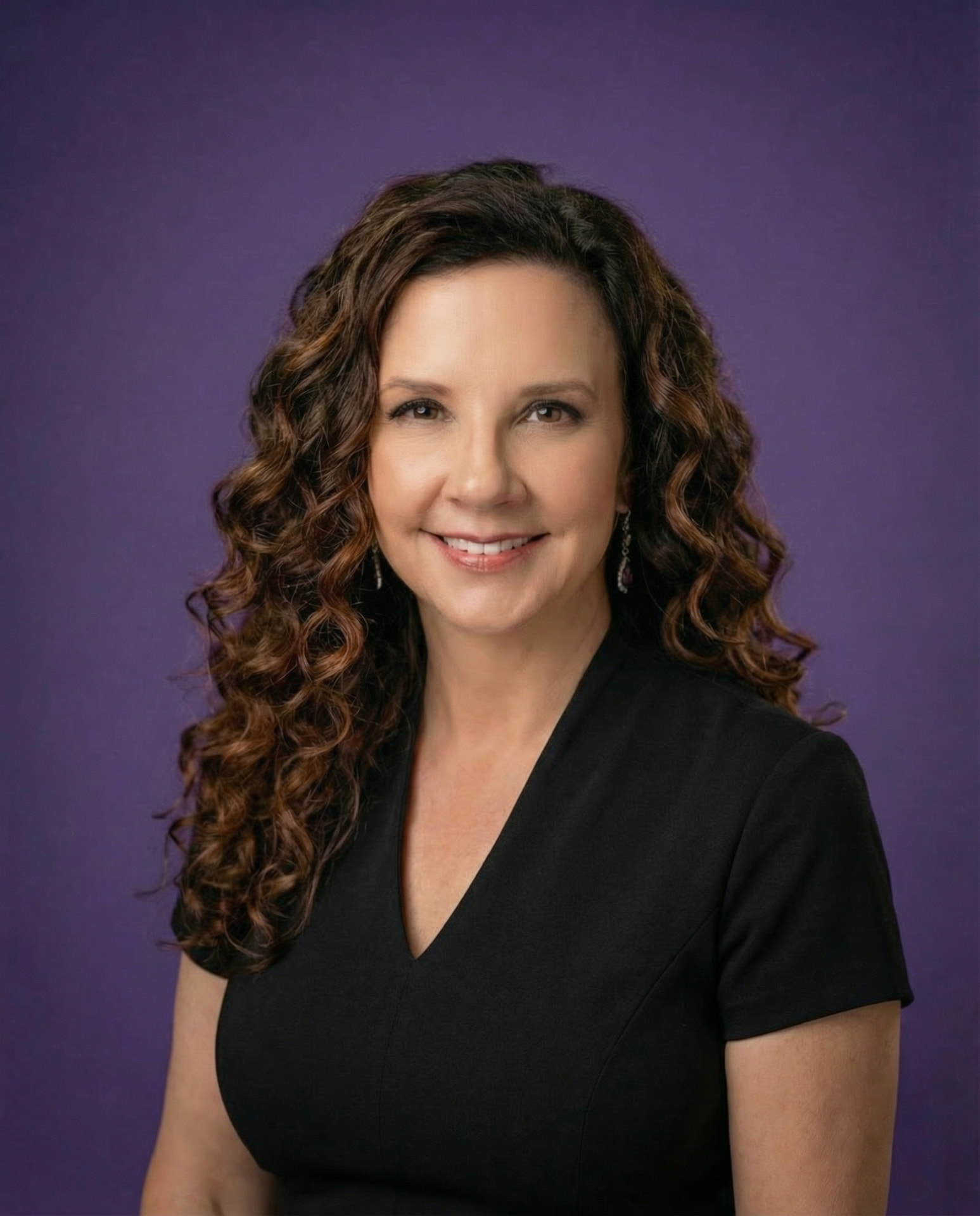
Holly Roland, General Partner. Auzora is led by a hands-on go-to-market operator who knows what moves a business from early traction to scale. As an interim CMO and GTM executive, Holly has worked inside early-stage companies to rebuild pipelines from the ground up, build GTM strategies tied to ARR goals, and hire and train first sales teams. She has helped more than 50 early-stage and venture-backed startups win customers, and has taught applied AI at Stanford and UC Berkeley.
- Interim CMO & GTM executive, AI health tech: built the GTM team from scratch and a $20M pipeline in six months
- Interim CMO & GTM executive, pharma technology: $18M in new qualified pipeline in nine months from near zero
- Interim GTM executive, regulatory compliance technology: defined and led go-to-market strategy and contributed to the company’s acquisition
- Oracle, VP Go-to-Market, Cloud Services: led go-to-market for seven new cloud services, fueling $1B in revenue growth
- SAP, VP Strategy & Marketing, GRC business unit: drove 3X+ annual revenue growth for three consecutive years
Auzora is being created now: the thesis, a pipeline of target companies, and the screening process are built, and the clinical advisory panel is forming.
Say hello
Building something in women’s hormonal health? A clinician or researcher who wants to help? Press or partnerships? We would love to hear from you.
Or email holly.roland@auzorafund.com
We use what you share only to reply to you. We do not sell or share it, and we will delete it if you ask.